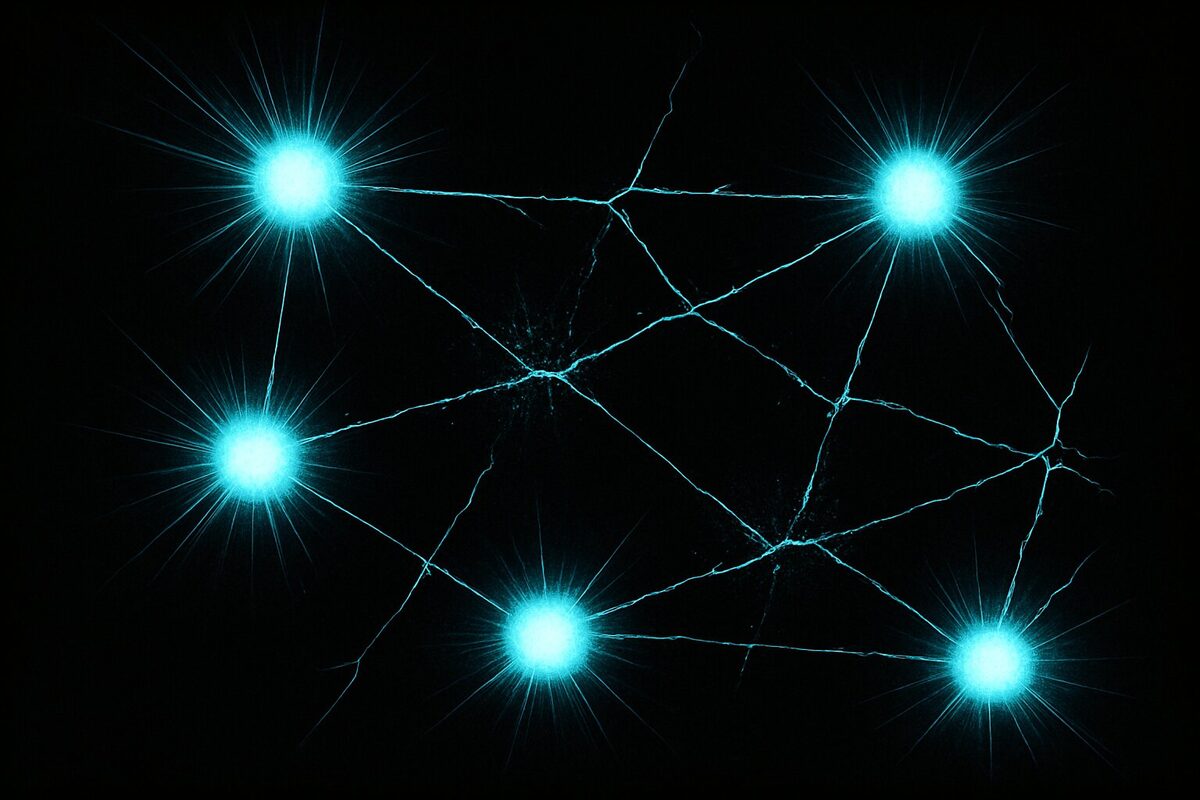
Before the AI wave, teams coordinated through human channels — messy, but roughly matched to the volume they carried. A weekly marketing-sales sync. A quarterly CS-product review. A handoff call between the closing rep and the CSM. None of it was comprehensive, but the essential context usually got through, because a person could summarize it in the time allotted.
Then every function adopted AI, one at a time. And the channels connecting them didn't change at all.
Engineering saw it first, and worst.
The checkpoint that couldn't keep up
Give a developer an AI coding agent and commit volume goes up fast — sometimes by multiples in a single sprint. Code review was built for human-pace output: a senior engineer reads a diff, reasons about it, approves it. That checkpoint doesn't get faster just because the code arrived faster. It gets skimmed.
In July 2025, Replit’s AI coding agent deleted a production database mid-session — during an active code freeze the agent had been explicitly programmed to respect. The agent didn’t malfunction in the traditional software sense; it executed its reasoning at agent speed, straight through a control gate designed for humans.
A code freeze is a human coordination mechanism — a person pausing before a risky change. It was never built for an agent that doesn't pause unless a system forces it to.
Acceleration didn't break the work. It broke the checkpoint that was supposed to catch bad work.
The bandwidth mismatch — human cadence vs. machine output
The same mismatch shows up everywhere else, just slower and less immediately catastrophic.
| Function / Handoff | Machine-Speed Output Generated | Human-Speed Checkpoint Choking It | The Systemic Result |
|---|---|---|---|
| Marketing → Sales | 10× campaign variants, real-time prospect intent data. | 30-minute weekly sync. | Context gets cut to fit the meeting; Sales pitches blind. |
| Sales → CS | Full AI call transcripts, objection maps, research logs. | 30-minute handoff call. | Rep summarizes 5% of the deal context; CS misses key promises. |
| CS → Product | Real-time behavioral telemetry, daily churn risk signals. | Quarterly review meeting. | High-value product feedback sits in a ticket for 90 days. |
Every function is sprinting inside its own lane. Nothing widened the on-ramps between them.
Every AI tool creates a data silo
It gets worse. Each new AI tool generates intelligence that gets locked inside its own platform:
- Marketing’s AI creates audience insights trapped in Marketing’s platform.
- Sales’ AI creates pipeline predictions trapped in the CRM.
- Support’s AI creates risk indicators trapped in the ticketing system.
Before AI, information lived in people's heads — hard to access, but mobile. A hallway conversation between Sales and CS still moved context. Today, intelligence lives inside siloed platforms, and the person in the hallway has access to only a fraction of what their own team's AI already knows.
Every new AI tool becomes a data silo. The better the tool, the more valuable the intelligence it locks away from the rest of the business.
Why “integrate everything” isn't the answer
The instinctive response to data silos is to launch an integration project: build a unified data layer, set up a CDP, and make every tool technically visible to every other tool.
That helps at the margins, but it solves data connectivity, not decision velocity.
Knowing that Customer Success data is technically queryable from a Sales platform doesn't mean an Account Exec will look at it, understand it, or act on it. Pumping more AI-generated data through the same human-speed review meeting doesn't fix the bottleneck — it just floods the channel.
Data visibility is not decision routing.
The weekly sync, the quarterly review, the handoff call, and the code freeze gate were all designed for human-scale volume. Adding more integrations without redesigning the checkpoints just accelerates the traffic jam.
Four checkpoints to rebuild
The weekly sync is a batch process. If AI generates intelligence continuously, coordination needs to run continuously too — not more meetings, but information flows that route the right intelligence to the right person automatically.
The 30-minute deal briefing needs to become an automated context transfer carrying every call insight, research finding, and engagement pattern — without a human summarizing it first. The intelligence already exists in the systems. The handoff should move at system speed.
When a decision needs input from three teams, the default is sequential: ask A, wait, ask B, wait, assemble, decide. AI-augmented teams can assemble that intelligence from every source simultaneously. The decision process should reflect that.
If every team dashboard improves but conversion is flat, the problem isn't in any one team. Start measuring what happens between teams — handoff speed, context preservation, how much intelligence actually gets used across a boundary.
You gave every department a faster engine, but left the transmission built for human cadence.
A company with average tools and machine-speed coordination will outperform a company with premium AI assistants and bottlenecked meetings. Every single time.
Stop asking how to make your teams faster in isolation. Start rebuilding the checkpoints connecting them.
Tracing where human-speed checkpoints are choking machine-speed output is the exact job a diagnostic performs.
A PARALLAX Diagnostic delivers a fixed-fee map of your actual coordination bottlenecks, prices the velocity drag across your pipeline, and hands you a prioritized plan to modernize your connective tissue before you sign another software contract.